Whether you are starting your cooking journey or already experienced in the kitchen, learning knife skills is one of the most valuable skills you can develop. Proper cutting techniques improve efficiency, enhance safety, and elevate the quality of your meals.
From precise cuts that improve texture to clean, uniform slices that enhance presentation, mastering knife skills is essential for anyone who enjoys cooking at home.
Let’s explore how improving your knife skills can build confidence, improve your cooking process, and help you create delicious, well-prepared dishes.
1. Knife Skills: The Foundation of Good Cooking
Great cooking begins with proper preparation, and the knife is one of the most important tools in any kitchen. It plays a key role in both the cooking process and the final result.
Precision is essential. Whether you are mincing, dicing, or julienning, consistent cuts improve both texture and flavour. Evenly cut ingredients cook at the same rate, helping your dishes turn out exactly as intended.
2. Improve Efficiency in the Kitchen
Strong knife skills can significantly reduce preparation time. When cutting techniques are efficient and controlled, cooking becomes faster and more enjoyable.
- Faster preparation: Practice leads to smoother and quicker cutting.
- Uniform cuts: Even pieces cook consistently, reducing the need for adjustments.
- Less waste: Clean cuts help you use ingredients more efficiently.
Using cutting techniques such as the rock chop, where you sway your knife back and forth, or the bridge grip, where you use your fingers and thumb to create a bridge over the food you’re cutting, not only saves time but helps you work smarter, not harder.
3. Types of Knife Cuts

Understanding different cutting styles helps you improve both presentation and cooking performance.
Mincing: Finely chopping ingredients like garlic, herbs, or onions to release flavour evenly throughout a dish.
Dicing: Cutting ingredients into small, even cubes, ideal for vegetables in salads, stews, and mixed dishes.
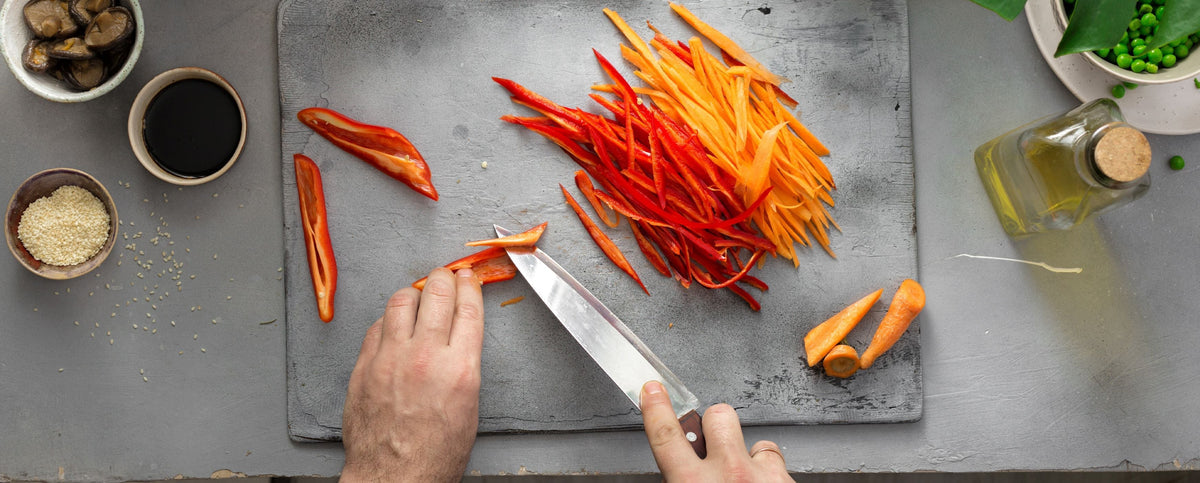
Julienne: Creating long, thin strips, commonly used for vegetables such as carrots, courgettes, or peppers.
Chiffonade: Producing thin ribbons from leafy greens and herbs, perfect for garnishing and adding fresh flavour.
Brunoise: A very fine dice used for precise presentation, often for vegetables in sauces or garnishes.
4. Safety First

The kitchen is one of the most common household places for accidents, so it’s no surprise that knife safety is critical to ensure you keep mealtime mishaps at bay. Learning how to properly grip your knife, where to place your fingers, and how to move the blade safely will have you dicing away happily while minimizing the risk of injury.
Safety tips for handling knives:
- Use a proper grip: Always firmly grip the handle of your knife with your dominant hand while your other hand guides the food along the cutting board. Keep your fingers tucked inward to avoid accidental cuts.
- Stabilise ingredients: Use your non-dominant hand to stabilize the food you're cutting. The “claw grip” is a great technique in which you curl your fingers inward, knuckles out, for a safer guiding method.
- Stay focused: When using sharp knives, be mindful of the edge and eliminate distractions. Never rush and focus on the cutting itself.
- Use a stable surface: A non-slip cutting board will ensure your food doesn’t slide around as you cut, preventing accidents.
5. Caring for Your Knife
Proper knife care ensures safety, precision, and long-term performance. A sharp knife is safer and more effective than a dull one.
- Sharpen regularly: Use a sharpening stone or professional service.
- Store properly: Use a knife block, magnetic strip, or protective cover.
- Clean and dry: Wash after use and dry immediately to prevent damage.
6. Enhance Presentation
Sharp, skilled knife work does more than just make cooking easier, as it also contributes to how phenomenal your dishes look. Whether you’re slicing vegetables into delicate, uniform rounds or julienning herbs to garnish a plate, precision cuts are essential for that restaurant quality look, guaranteed to impress your family and friends.
- Uniformity: Consistent cuts not only look better, but they also cook more evenly, giving your dish an air of refinement.
- Delicate cuts: Techniques like chiffonade for leafy herbs or brunoise for finely diced vegetables cooked in butter can transform the aesthetics of your dish, making it look as good as it tastes.
7. Knife Types and Brands

Different knives are designed for different tasks. Using the right knife improves both safety and performance.
- Chef's Knife: The versatile all-around MVP, perfect for all things chopping, slicing, and dicing.
- Paring Knife: Your tool for peeling and more intricate cuts.
- Serrated Knife: Ideal for cutting soft foods with hard exteriors (like bread or tomatoes).
- Santoku Knife: A Japanese knife with a flatter blade that makes slicing, dicing, and mincing a breeze.
Choosing a high-quality knife improves efficiency and ensures consistent, precise cuts.
8. Improve Texture and Flavour
Think of how a finely minced onion blends seamlessly into a dish, or how evenly diced vegetables cook at the same rate, creating a harmonious texture. Proper knife techniques enhance flavor because they maximize your ingredients’ potential.
For instance:
- Finely minced garlic releases more flavour.
- Evenly sliced vegetables cook consistently and taste better.
With strong knife skills, your dishes will have improved texture, balance, and overall quality.
Conclusion: Why Knife Skills Matter
Mastering knife skills enhances every part of cooking, from preparation and safety to presentation and flavour. Whether preparing everyday meals or special dishes, proper knife techniques make cooking more efficient and enjoyable.
With the right skills and tools, you can approach cooking with confidence and create meals that look and taste exceptional.